



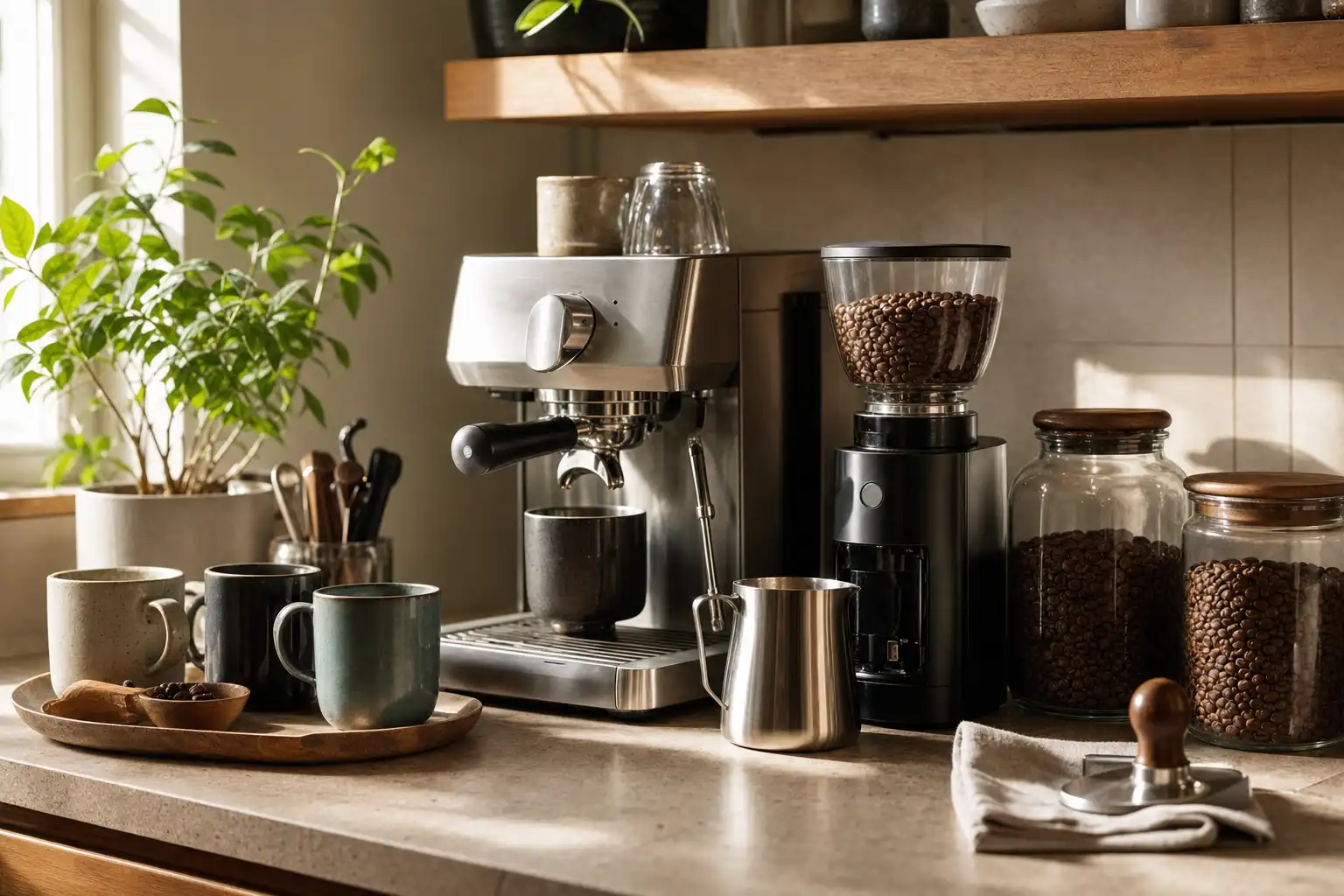
Dialing in a coffee bar setup at home transforms your daily routine into a ritual, and it doesn’t require barista credentials. This practical guide addresses espresso vs drip decisions, the best coffee grinder for home use, water quality, and repeatable recipes that enhance extraction and flavor consistency. This coffee bar setup guide also covers options for a built-in coffee bar and walks you through layout, equipment, beans, water, dialing in grind, milk texturing, maintenance, and budget-savvy upgrades so you can craft cafe-quality drinks at home.
Why Build a Home Coffee Bar?
Beyond saving money, a dedicated setup lets you control freshness, grind size, and extraction. You’ll also reduce waste by brewing only what you need and ditching single-use cups.
“Great coffee is 80% preparation and 20% equipment – put your workflow first.”
Add visual accents and storage with bar stools and counter shelving, or upgrade mugs and thermoses in kitchen accessories. Consider a cart from kitchen islands & trolleys to create a mobile station.
Plan the Layout – Coffee Bar
Think in zones: water → grind → brew → serve → clean. Keep beans and grinder together; place scale, kettle, and brewer nearby; store cups and syrups within arm’s reach. Leave heat-safe space for steam wands and kettles. If you’re designing a built-in coffee bar, plan outlets, water lines, and heat-safe surfaces from the start.
Choose the Right Gear – Coffee Bar
Espresso vs Drip vs Other Brewers
| Feature | Espresso Machine | Drip Coffee Maker | French Press | Pour-Over |
|---|---|---|---|---|
| Best For | Lattes, cappuccinos, and rich, concentrated coffee shots. | Conveniently brewing multiple cups of classic coffee. | Full-bodied, robust coffee with a rich texture. | Clean, nuanced, and flavorful single cups. |
| Flavor Profile | Intense, concentrated, complex, with a rich crema. | Classic, balanced, clean. Varies greatly by machine quality. | Heavy body, rich, oily, and can have some sediment. | Bright, clean, highlights delicate and acidic notes. |
| Effort Level | Medium to High (requires grinding, tamping, and cleaning). | Low (add grounds and water, press a button). | Low to Medium (requires boiling water and timing the steep). | High (requires precise, manual pouring with a gooseneck kettle). |
| Cost | $$$ (Highest initial investment). | $ – $$ (Wide range of prices). | $ (Very budget-friendly). | $ (Budget-friendly, but a gooseneck kettle is recommended). |
| Grind Size | Fine | Medium | Coarse | Medium-Fine |
Espresso: Intense, concentrated coffee for lattes/cappuccinos. Look for machines with stable temperature/pressure and a proper steam wand.
Drip: Set-and-forget convenience; ideal for households. Thermal carafes improve heat retention.
Manual (pour-over, AeroPress, moka, French press): Low cost, high control; excellent for learning extraction.
See the Specialty Coffee Association’s brew standards for Golden Cup ratios and extraction targets (sca.coffee).
Grinders & Grind Size
Burr grinders produce even particle sizes and better extraction than blade grinders. For espresso, choose stepless or fine-adjust burr sets; for pour-over/drip, stepped grinders with repeatable clicks help consistency. The best coffee grinder is the one that delivers repeatable grind sizes for your chosen method.
Milk Tools & Frothers
A stainless pitcher with a sharp spout helps latte art. If your machine lacks a steam wand, consider a standalone milk frother.
Beans, Water, and Ratios – Coffee Bar
Buy freshly roasted beans in small batches; store in an opaque, airtight container. Use filtered water within recommended mineral ranges for taste and equipment longevity. Typical starting ratios: 1:15–1:17 (grounds: water) for filter coffee; ~1:2 brew ratio for espresso.
The SCA water handbook outlines target hardness/alkalinity ranges (sca.coffee).
How to Dial In – Coffee Bar
- Pick a recipe (e.g., 18 g in, 36 g out, ~27–32 s espresso).
- Adjust grind: if sour/weak, grind finer; if bitter/ashy, grind coarser.
- Tamp level; keep puck prep consistent.
- Taste and iterate; change one variable at a time.
Organization & Aesthetics
Use a knock box, brush, and microfiber towel. Mount a pegboard for tools. Corral syrups, sugars, and spoons on a tray. Add a stool to create a proper café perch.
Cleaning & Maintenance
Backflush espresso machines, descale as needed, and purge steam wands after each use. Clean grinders weekly to remove oils. Wipe surfaces daily to prevent buildup.
Budget, Good/Better/Best
- Good: Manual brewer + burr grinder + kettle.
- Better: SCA-certified drip machine + scale + thermal carafe + quality grinder.
- Best: Prosumer espresso machine + stepless grinder + water filtration + distribution tools.
FAQs
- What’s the most impactful upgrade?
- A quality burr grinder — often the best coffee grinder you can afford — increases extraction consistency immediately.
- Do I need a scale?
- Yes. Brewing by weight improves repeatability and cup quality.
- How often should I descale?
- Depends on water hardness and usage; check your machine’s manual and monitor flow/taste.
Next Steps
Ready to build? Explore coffee makers, grinders, and Deals under $40. Questions? Contact PricZone Support. Build a coffee bar setup you’ll love — whether freestanding or a built-in coffee bar.